Post-Tension Slabs: A Real Estate Agent's Guide to Explaining Foundations

David Jones
Senior Contributor
David Jones is a seasoned home inspector and construction expert with over 20 years of experience. He specializes in structural integrity, foundation issues, and detailed home safety assessments.
View Full Profile →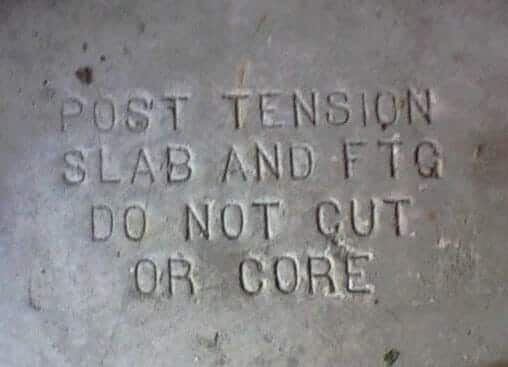
As a real estate agent, you have likely encountered the moment: you’re showing a beautiful, modern home, you walk into the garage, and the buyer freezes. They are staring at a stamped warning on the concrete floor or a placard on the wall that says:
“WARNING: POST-TENSION SLAB. DO NOT CUT OR DRILL.”
Suddenly, the buyer is worried. “Is this foundation fragile? Is it dangerous? Why can’t I drill into my own floor?”
If you don’t have a confident, knowledgeable answer ready, this moment can kill a deal. The reality, however, is that a post-tension slab is often structurally superior to traditional foundations in many regions.
This guide is designed to give you the talking points you need to turn a “scary warning” into a selling point.
The “Elevator Pitch” for Agents
When a buyer asks, “What is a post-tension slab?”, here is your simple, confidence-inspiring answer:
“It’s a high-performance foundation used in modern construction. Instead of just sitting on the ground, the concrete is reinforced with steel cables that are tightened like guitar strings. This compresses the concrete, making it incredibly strong and much more resistant to cracking if the soil moves. It’s actually a premium feature for homes in this area.”
Deep Dive: How It Works (For the Detail-Oriented Buyer)
To explain why it’s better, you need to understand the mechanics.
1. The Rubber Band Analogy
Imagine a row of wooden blocks sitting on a table. If you push them from the sides, they stay together tight. If the table (the soil) bows or shifts, the blocks might separate. Now, imagine drilling a hole through the center of those blocks and running a rubber band through them, pulling it tight. Now, even if you lift the table or shake it, the blocks stay snapped together as one solid unit.
That is what post-tensioning does to concrete.
2. High-Strength Steel Cables
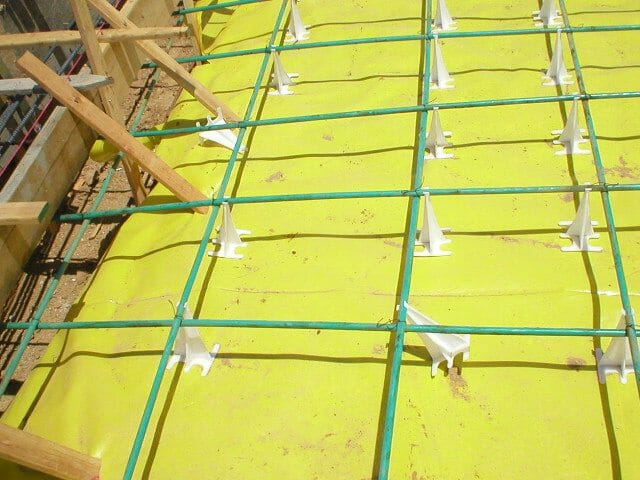
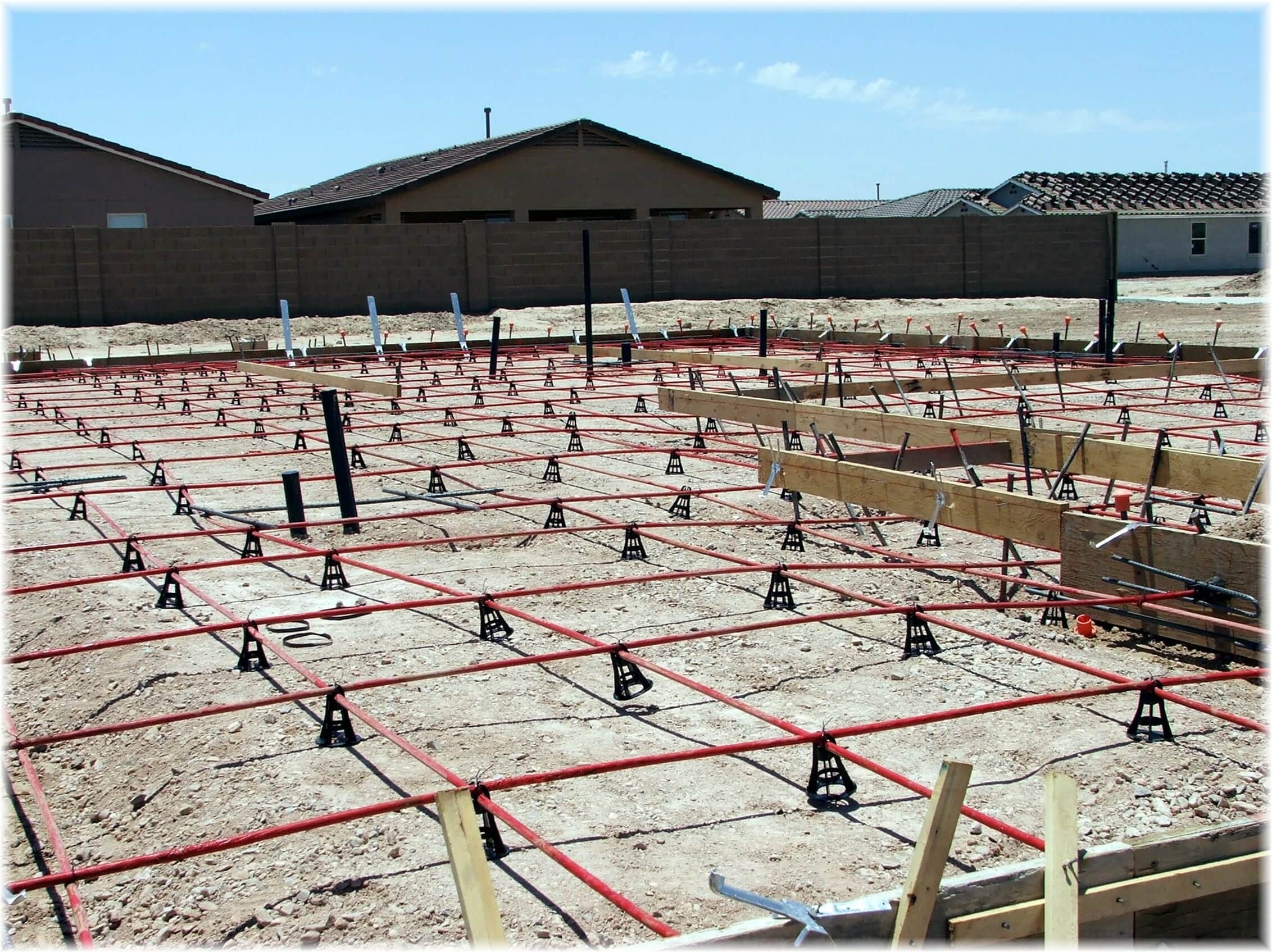
Before the concrete is poured, builders lay out a grid of high-strength steel cables (tendons) inside protective plastic sheathing. Once the concrete cures to a specific strength (usually within 7-10 days), hydraulic jacks pull these cables to extreme tension—often 33,000 pounds of force.
3. Active Compression
This tension actively squeezes the concrete slab together. Concrete is naturally strong in compression (being squished) but weak in tension (being pulled apart). By keeping the slab in a permanent state of compression, the system plays to concrete’s natural strengths.
Why Builders Use It (It’s Not Just Cost)
A common myth is that builders only use post-tension (PT) slabs because they are “cheap.” While they can be more cost-effective than digging massive footings, the primary driver is performance in expansive soils.
In states like Texas, California, Arizona, and Nevada, the soil content often includes clay that swells when wet and shrinks when dry.
- Traditional Rebar Slabs: Relies on the sheer weight and stiffness of the concrete to resist this movement. If the soil heaves significantly, the slab can crack.
- Post-Tension Slabs: Designed to “float” on top of moving soil. Because the slab is comprised of steel under tension, it can bridge minor gaps in the soil support without cracking apart.
Explaining the “Scary” Signs
The biggest hurdle for buyers is the warning sign itself.
The Buyer’s Fear: “This house is a bomb. If I drop a hammer, will it explode?” The Reality: The slab is incredibly durable for everyday living. You can park huge trucks on it, jump on it, and live normally. The warning is specifically for renovations involving heavy drilling.
Talking Points for the “Warning Sign”:
- “It’s about remodeling, not living.” Explain that the warning only applies if they plan to cut into the slab to move plumbing or install a floor safe.
- “It’s basically a map.” The warning tells contractors, “Hey, check before you dig.”
- “It’s solvable.” If they do need to drill into the slab later (e.g., to move a toilet island), they simply hire a scanning company (like an X-ray for concrete) to locate the cables first. It’s a standard, inexpensive process.
Top 3 Myths Agents Should Bust
Myth #1: “If the cable snaps, it shoots out like a missile.”
Fact: While theoretically possible during the construction phase when cables are exposed, once the house is finished, the ends are grouted over and buried. In the incredibly rare event a cable breaks (usually from someone cutting it with a diamond saw), the friction of the concrete and the plastic sheathing usually contains the energy. It might pop the concrete locally, but it won’t slice through the house.
Myth #2: “It’s a cheaper, weaker foundation.”
Fact: It is often stronger against the forces that actually matter in residential construction (soil expansion). Many structural engineers prefer PT slabs over increasing the thickness of standard slabs.
Myth #3: “If I see a crack, the system failed.”
Fact: All concrete cracks as it cures (shrinks). Hairline cracks are normal in any foundation. However, PT slabs generally have fewer cracks than rebar slabs because the compression holds them shut. If you see a crack, it’s usually cosmetic, not structural.
Summary Checklist for Agents
When listing or showing a home with a Post-Tension Slab:
- Don’t hide it. Point it out as a “reinforced foundation system.”
- Contextualize the warning. Compare it to structural wiring in a wall—you wouldn’t drill blindly into a wall without checking for wires, and this is the same logic for the floor.
- Highlight the soil benefit. “This foundation was specifically engineered to handle our local soil conditions better than older foundations.”
- Know the limitations. Be honest that they cannot simply rent a jackhammer and install a new shower drain on a Saturday. They need a pro to scan it first.
By framing Post-Tension Slabs as an intentionally engineered solution rather than a budget compromise, you build trust with your buyers and remove friction from the sale.